Heavy with Lemons
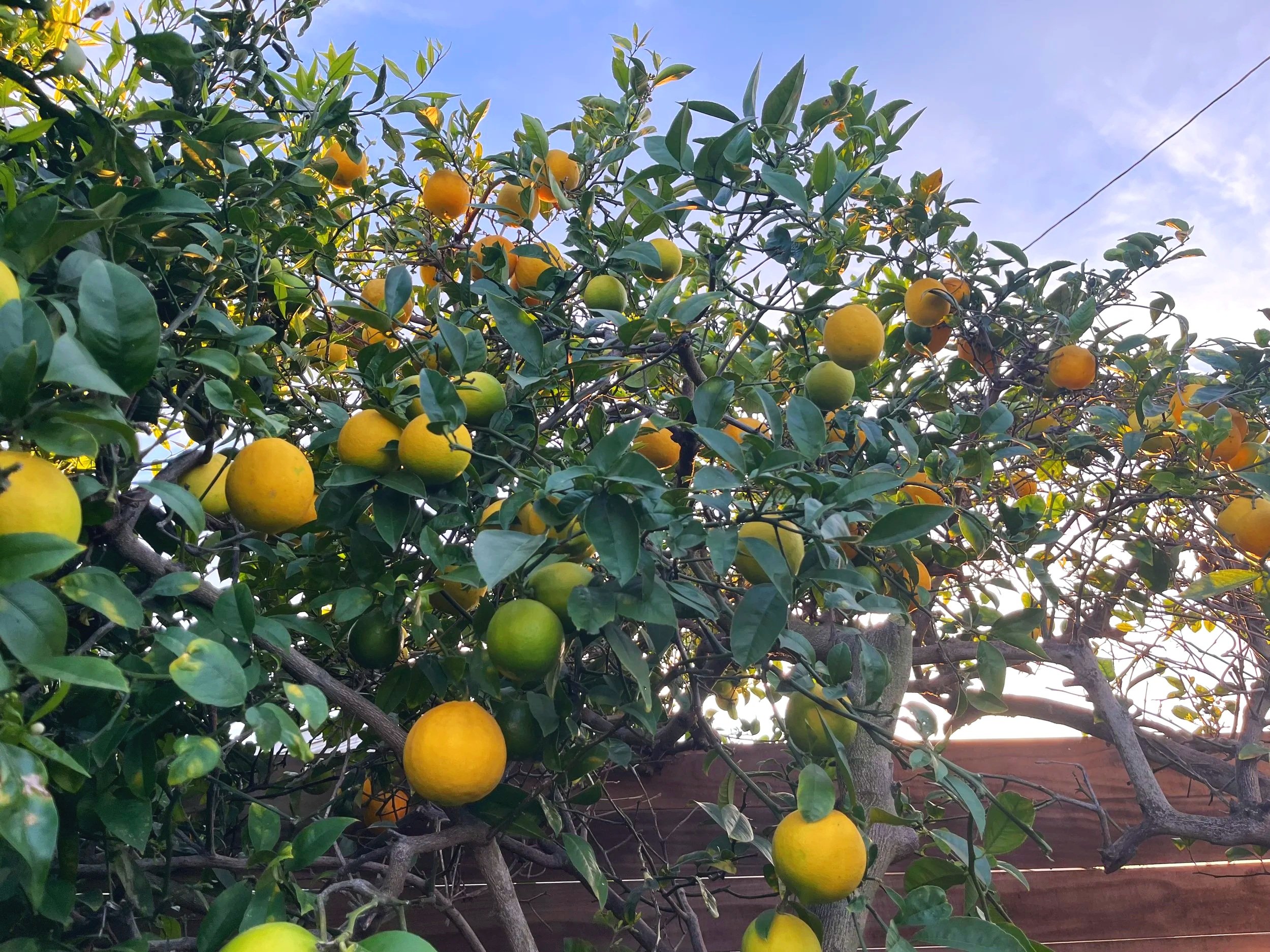
Sure, when life gives you lemons… but I’d bet whoever came up with that saying didn’t have a lemon tree in their backyard that bears enough fruit every year to fill a bathtub. Because after all the lemonade, lemon cakes, lemon dressings, lemon sauces, giving away bags of lemons to family, friends, and neighbors, and adding slices of lemon to almost every drink imaginable, the question remains: what do I do with all these $%&^% lemons?
We inherited the Meyer lemon tree in our backyard from the family that owned our place before us. It’s not the typical curvaceous, pom-pom-shaped tree you might be imagining. It had grown up and through a rotted wooden pergola we had to get rid of before we moved in. So now it’s just three slender, leggy trunks extending up to a wide beach umbrella-like canopy that sways a little too enthusiastically in the afternoon winds that rush inland off the Pacific.
When we were debating whether we should put a bid on the house, an old fixer, it was in the middle of the home buying frenzy fueled by near-zero mortgage rates and Covid fomo. As we watched prices skyrocket, we knew that if we didn’t buy something, and soon, we’d be priced out of the area code. We rushed to put together our list of pros and cons, and the number one reason to keep looking: the backyard. Not only was the view of the sky out back sliced into bands by layer after layer after layer of power lines, but the rumble and whirring of car traffic from the busy four-lane street half a block away seemed to make peace in that yard impossible.
But there was this lemon tree (#12 on our list of pros). We got the place.
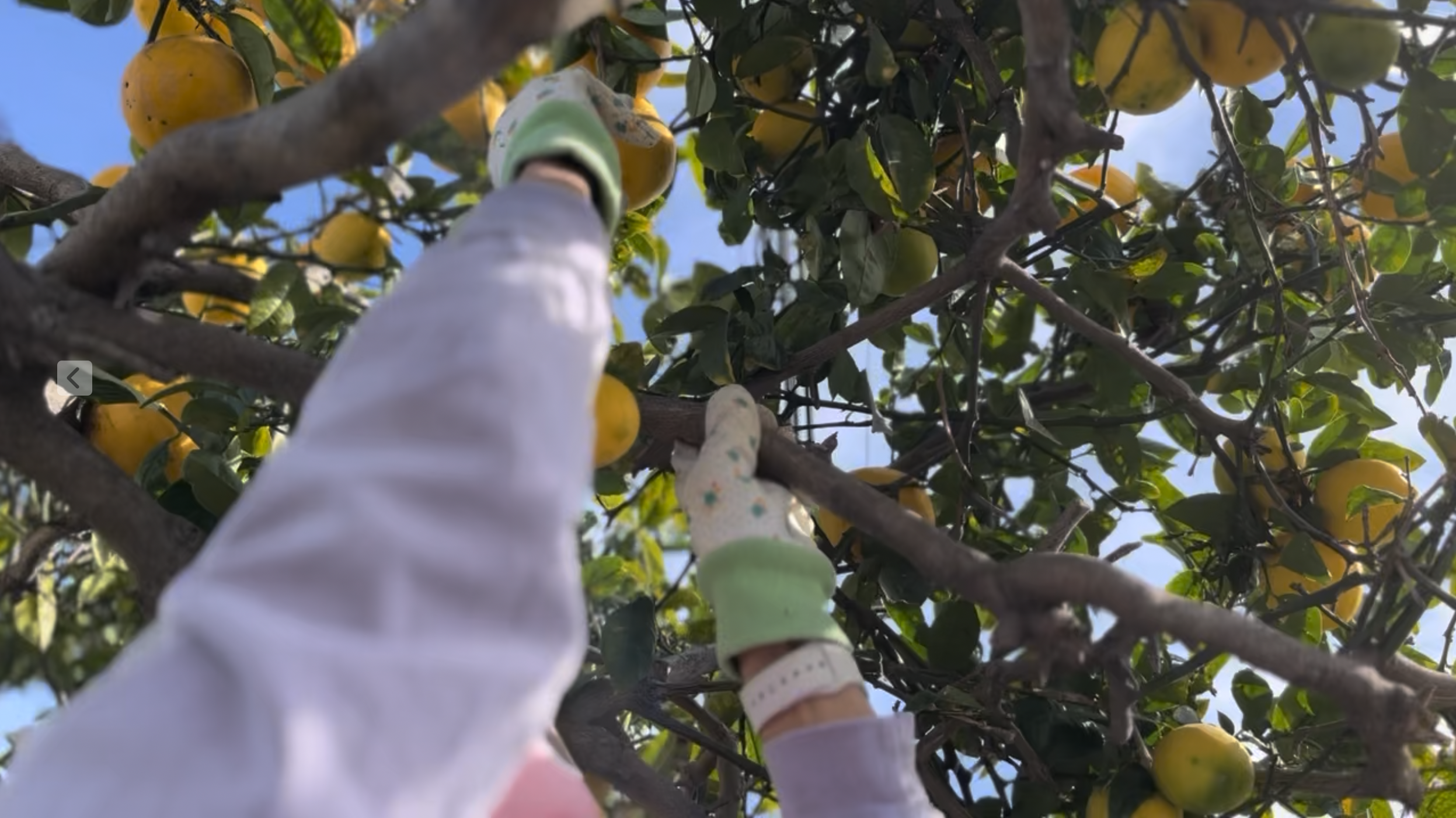
The first season was a lemon-scented honeymoon. We gathered as a family to pick the ripe fruit, washed them in extra-large Tupperwares outside, dried them tenderly and filled every bowl we owned. In the chaos of moving into the new place and needing to first replace a dead furnace, then the rusted out main sewer line, the lemon tree felt like a genuine delight.
After about a month, though, fruit flies started to hover and buzz around the sink and trashcan. When I reached for a lemon to squeeze over a grilled chicken skewer, my finger went clean through. I turned it over and found a pocket of powdery mold and fuzz covering four lemons. And outside, things weren’t looking much better.
Fuzzy white and grey mold balls were scattered everywhere. What lemons remained on the tree were stripped bare by mice that ate the peels but left the fruit. One turned into a dry, leathery sack drooping from its branch. And there were still more lemons coming.
Three more years of this. Green bin after green bin heavy with Meyer lemons wheeled to the curb.
I don't know when I first encountered preserved lemons. Somewhere in a Moroccan tagine, maybe a vinaigrette. But it was a picture in the Gjelina cookbook – a jar of them, golden and packed in an herbaceous brine - that stuck with me.
Canning our bumper crop of passion fruit a few months ago reminded me – preservation doesn’t just slow the process of decay, it transforms ingredients into something entirely new, with a laughably long shelf life. Seasonal abundance made available out of season.
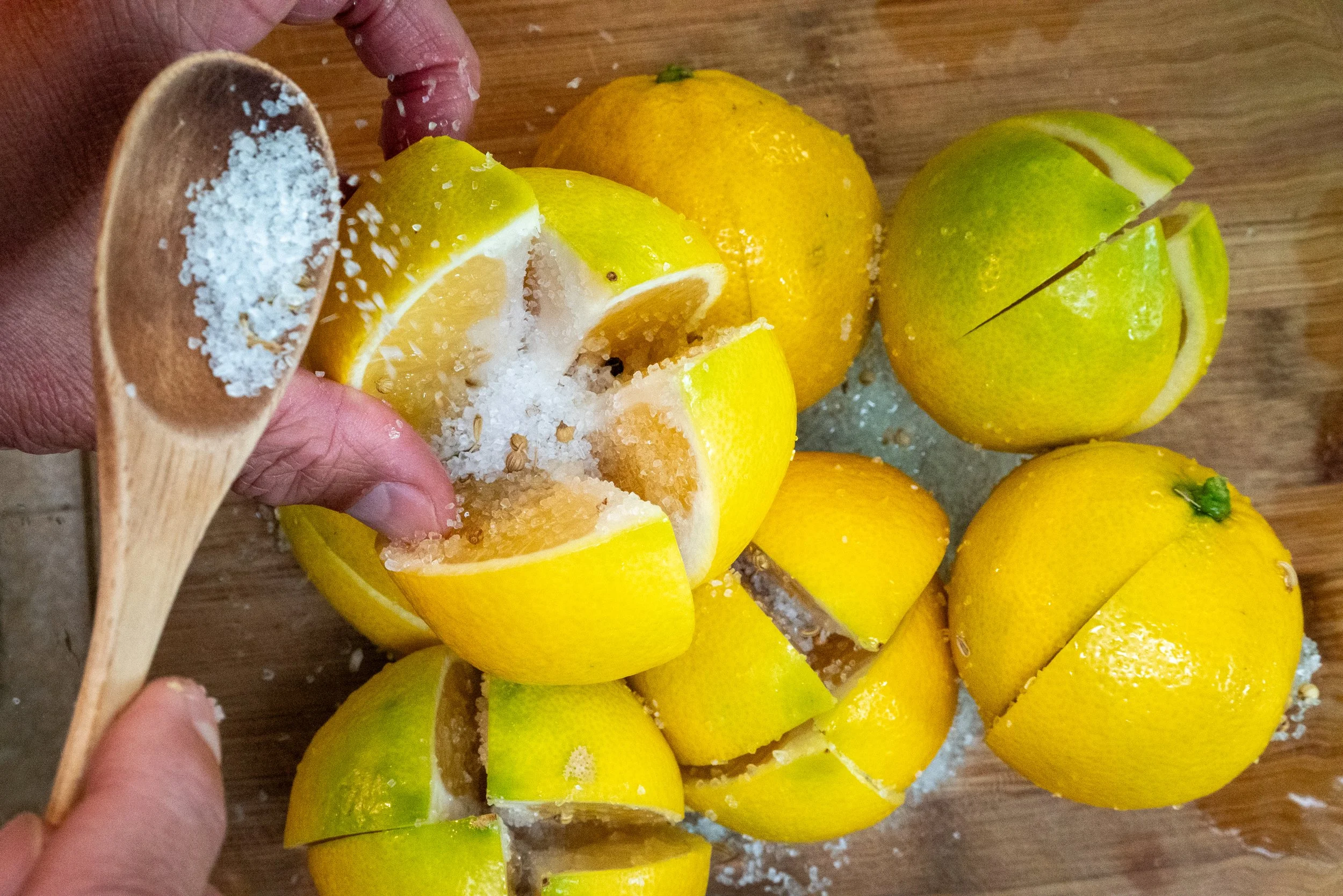
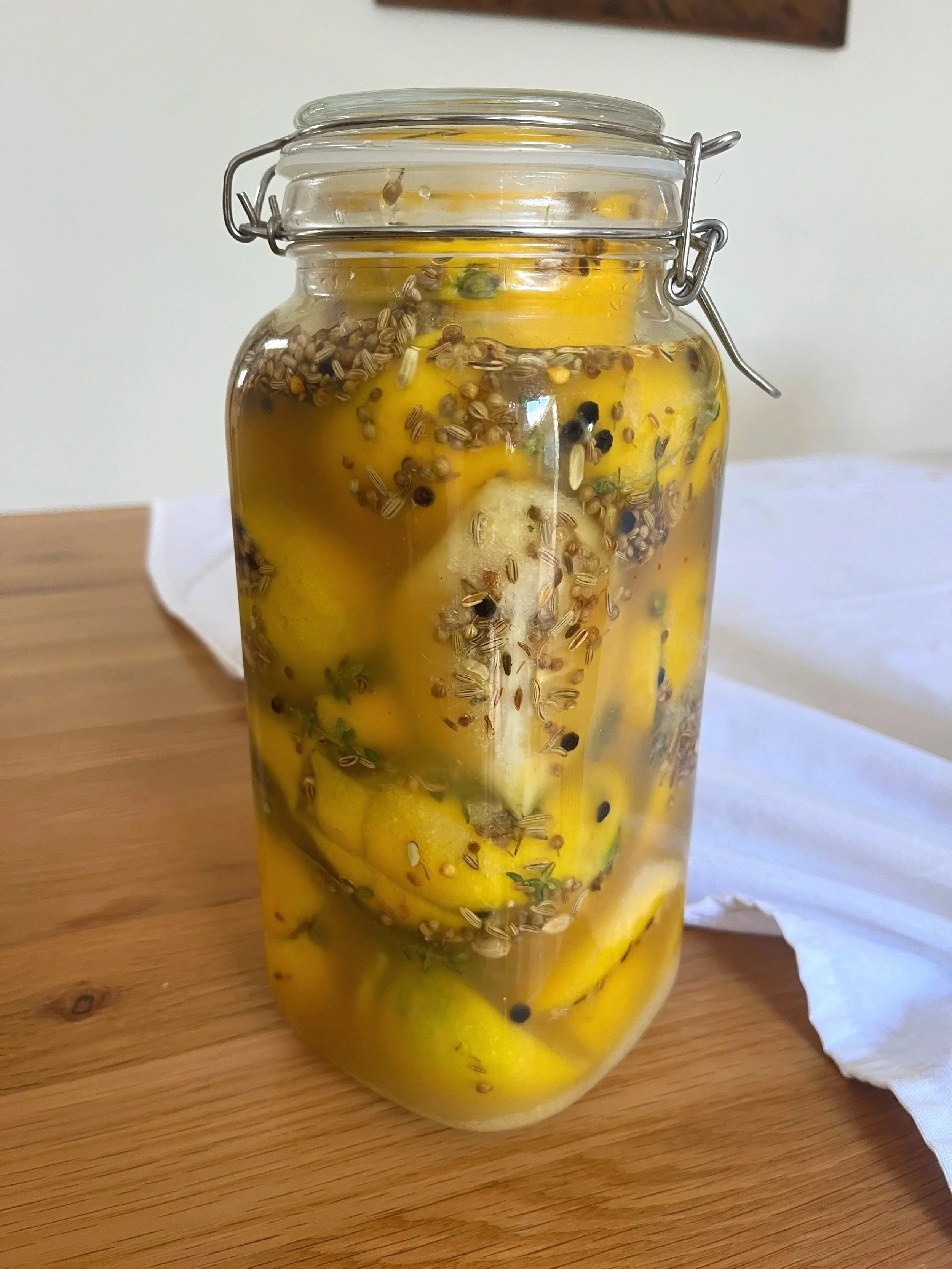
A few nights ago, I saw that a SpaceX launch out of Vandenberg would be visible to our west in a few minutes. We rushed outside, barely in time to catch the rocket tracing an arc across the darkening sky. We stood on our tiptoes to catch the jellyfish-shaped exhaust, through the power lines and above the canopy of the Meyer lemon tree, heavy with fruit and swaying in the breeze. I sure hope I like the taste of preserved lemons.